
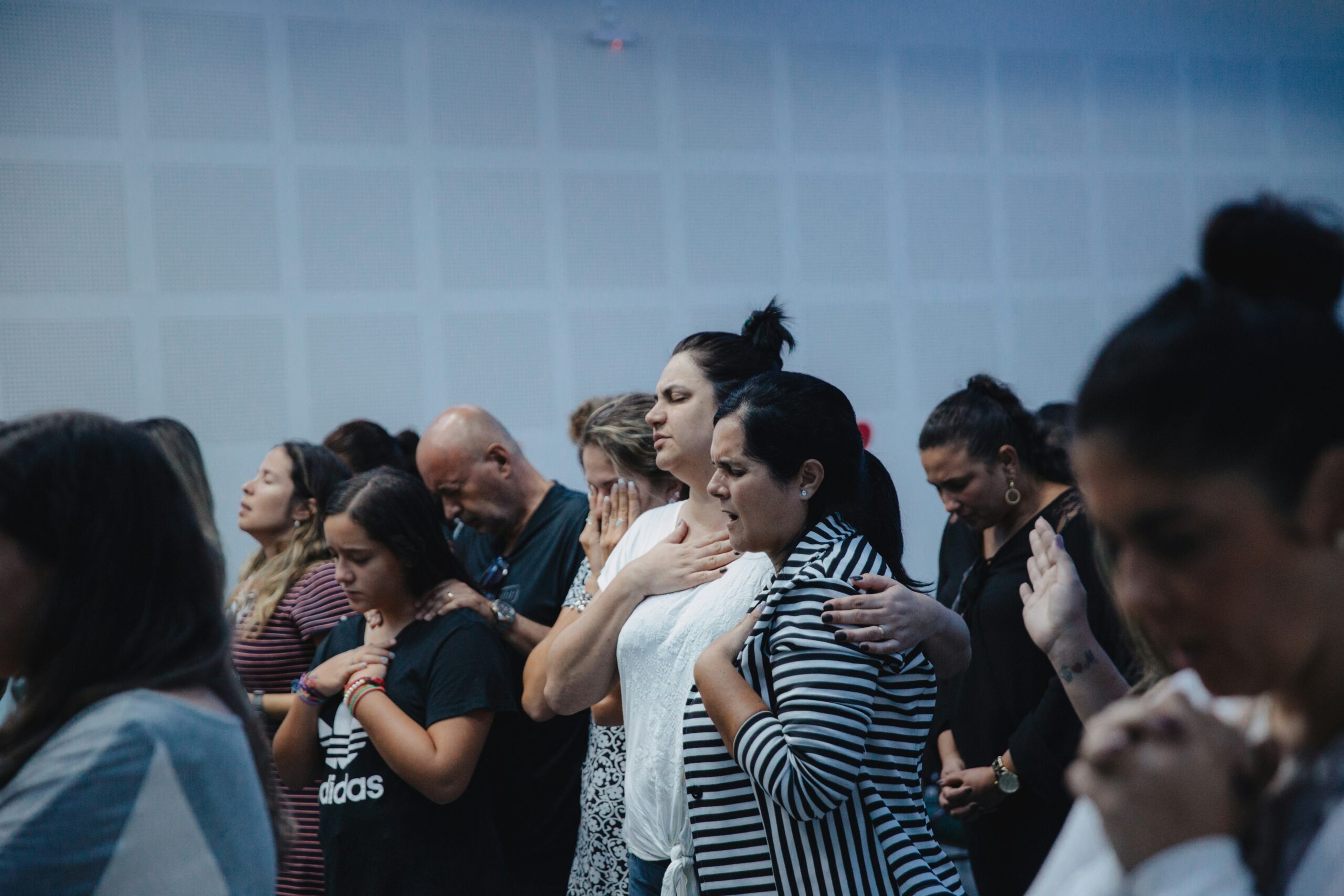
In the wake of the tragic attack in Bondi, many Australians are struggling to make sense of what happened, and what it means for us as a nation. On Table Talk, Doug spoke with Jacob Hill, WA State Director of the Australian Christian Lobby, about grief, responsibility, and how Australia can find healing and move forward with courage, compassion and hope.
“It Wasn’t Just an Attack on a Community – It Felt Like an Attack on Australia”
Bondi is one of Australia’s most recognisable places. For Jacob, that symbolism matters.

“When you think about Australia globally,” he said, “you think the Great Barrier Reef, the Harbour Bridge, the Opera House – but when you think beaches, you think Bondi Beach. So I think this was very, very strategic and very intentional.”
Jacob said he does not believe the location was random. “I personally can’t accept that it was a coincidence,” he said. “I think it was a really calculated attack – not just on the Jewish people in Australia, but on Australia itself.”
That reality, he believes, places the nation at a turning point. “I think we’re at a crossroads as a nation here,” Jacob said. “And how we deal with this will say a lot about who we are moving forward.”
Naming the Climate Without Blaming Communities
Throughout the conversation, Jacob was careful to be clear: responsibility rests with the individuals who carried out the violence. “At the end of the day, it was two individuals that did this,” he said.
However, he also argued that this does not mean broader issues can be ignored. “That doesn’t excuse certain things for perhaps contributing towards this,” Jacob said, pointing to what he described as an unchecked rise in public hatred toward Jewish Australians.
He referenced rallies and protests following October 7th 2023, saying, “We’ve seen hate speech go largely unchecked. And that continued through much of the next two years.”
Jacob was particularly concerned about what he described as a lack of consequences. “These are federal crimes,” he said. “Inciting violence, supporting terrorism, displaying terrorist symbols, that’s illegal. And there was no recourse.”
He added, “As much as they did not perpetrate the crime on the weekend, there has to be a very significant level of accountability taken, because there is complicity by omission.”
“If We Don’t Deal With It, We’ll Repeat It”
At the heart of Jacob’s concerns is Australia’s social contract – the shared values that shape how we live together.
“One of the beautiful things about Australia is that people from different nations, religions and backgrounds get along,” he said. “And one of the things we absolutely hate is bullies.”
He believes that allowing hatred to grow unchecked undermines that culture. “We need to look at how we as a country let this develop to a place where Australians are attacking Australians,” Jacob said. “Because if we don’t deal with it, we are just going to repeat it.”
At the same time, he emphasised that a Christian response does not abandon forgiveness. “As Christians, we forgive – 100%,” Jacob said. “Including the perpetrators. Judgment is mine, says God.”
“But that doesn’t mean we don’t have standards,” he added. “Part of our social contract is that we do have those standards.”
Courage, Conversation and Accountability
Jacob expressed frustration that difficult conversations are often avoided out of fear. “What I’m seeing is people would rather not offend somebody than uphold federal law,” he said. “And that’s a problem.”
He believes leadership courage is essential. “I think it’s going to require courage from our leadership,” Jacob said. “That’s where we need to be putting our energy.”
At a cultural level, he warned against shutting down debate. “The fear of being cancelled has overtaken the responsibility to enforce the law,” he said. “And if we can’t talk honestly as a nation, these things will continue to fester.”
“Iron Sharpens Iron – But Sparks Will Fly”
Reflecting on Proverbs 27:17, which talks about how iron sharpens iron, Jacob leaned into the idea that disagreement doesn’t have to destroy relationships. “We’ve really let ourselves down by losing the ability to have conversations where disagreement equals breaking relationship,” he said.
He believes the Church has a responsibility to lead here. “We’re positioned to have these conversations,” Jacob said. “We need to allow people to express their emotions, ask hard questions, and even say, ‘I don’t fully understand this, but I know it’s not okay.’”
He used a striking image to explain the balance required. “When you’re sharpening a blade, the attitude – the angle – matters,” Jacob said. “Too blunt and it doesn’t work. Too fine and it weakens the blade. There has to be a healthy balance.”
Standing With Those Under Threat
Jacob was clear about one immediate response he believes the Church must take. “We need to be able to say, ‘That’s not okay here,’” he said. “And that doesn’t mean I hate you. It means I won’t allow this to happen in my backyard.”
Reflecting on the story of the Good Samaritan, he added, “Particularly with the Jewish people right now, we need to be coming alongside them – like the Good Samaritan did. Doctrinally we’re different in many ways – but we have to say, ‘We’re with you.’”
A Prayer for Unity and Healing
The conversation closed with Jacob praying for families affected by the tragedy, for the Jewish community, for people of all faiths, and for national leadership.
“Every human being is made in the image of God,” he prayed. “And when we are unified, you command a blessing.”
In a moment marked by grief and tension, Jacob’s words point to a difficult but hopeful path forward – one marked by truth, courage, unity, and compassion.
Listen to the whole chat with Jacob Hill below.