
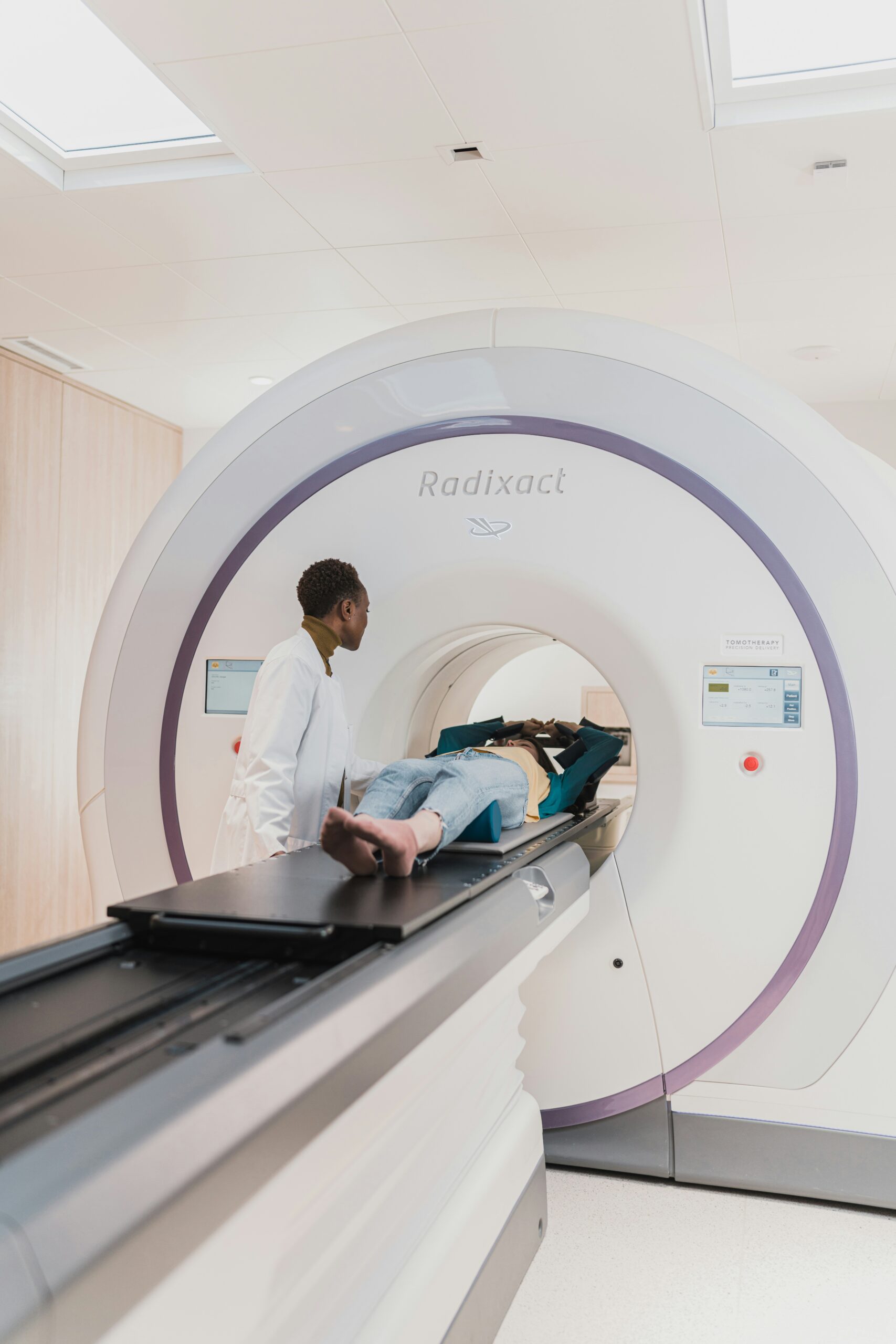
When you’re injured, it’s natural to want answers. But choosing the right scan isn’t as simple as picking the “best” one.
“People often think MRI is the gold standard,” says physio Melanie Mac. “But it’s not always the right choice. Different scans look at different things.”
Scans fall into three main categories:
- X-ray: Best for bones and fractures.
- Ultrasound: Uses sound waves and is ideal for soft tissues like tendons and ligaments.
- MRI: Uses magnets and radio waves to capture detailed images of soft tissue and joints.
Each has its strengths, limitations, and costs.
Why You Might Start With a ‘Cheaper’ Scan
If you’ve ever wondered why you got an ultrasound before an MRI, it’s not about cutting corners. It’s about being safe and efficient.
“In medicine, we aim to do the least invasive thing first,” Melanie explains. “If we can avoid radiation or an expensive scan, we do.”
Often, an ultrasound gives enough detail to guide treatment. If it doesn’t, the next step might be an MRI.
Timing Matters
Is it urgent? That depends.
“If there’s a complete tendon rupture, like the supraspinatus in your shoulder, early scanning is crucial,” Melanie says. “The tendon can die off if left too long.”
But for other issues, you may need to wait and that’s okay. Scans are a piece of the puzzle, not the whole picture.
Assessment First, Scan Second
“Good assessment leads to good diagnosis,” Melanie emphasises. Scans should confirm what a skilled practitioner already suspects, not replace their expertise.
“I don’t send everyone for a scan. But if I suspect instability in a joint, a scan helps confirm it.”
Still, the real question is will the scan change the treatment plan? “If the answer doesn’t impact your recovery steps, you may not need it at all.”
Scans Don’t Show Pain
One of the biggest myths? “People expect scans to explain their pain,” Melanie says. “But scans can’t see pain.”
You might have arthritis on a scan but feel fine. Or feel awful and have a scan that shows nothing. It’s frustrating, but true.
Overused or Misunderstood?
X-rays for sprained ankles are common but not always necessary.
“Unless there’s suspicion of a fracture, an X-ray may not help,” Melanie notes. “People get impatient when recovery takes longer than expected, but healing can surprise you in the last week.”
And while shoulder scans are frequent, that’s because shoulders are often unstable or injured.
Be Part of the Process
Radiographers are there to help. If you’re getting an ultrasound, don’t just lie back silently.
“Point to the sore spot,” Melanie encourages. “Radiographers follow referrals closely, but they also want to make sure they’re scanning the right place.”
They can’t give you answers on the spot, though. That has to come from your referring health professional.
What About Other Types of Scans?
There are more options than just X-rays and MRIs:
- CT Scans: Great for bones and serious trauma cases.
- EOS Scans: A full-body, low-radiation scan ideal for posture, leg length, and spine alignment.
- DEXA Scans: Used to measure bone density beneficial for diagnosing osteoporosis.
- Bioimpedance Tests: Common in gyms, these measure fat and muscle by sending a small current through the body.
Each has its place. But again, it comes down to: what will you do with the result?
Use Scans Wisely
Scans are incredible tools, but they’re not magic answers. “They’re there to guide treatment,” Melanie says. “Not just to validate your pain or fears.”
Before you book one, ask yourself will this scan help me move forward in my treatment? If yes, go for it. If not, have another chat with your healthcare provider.
Listen to Melanie’s full conversation with Doug on Table Talk.