

When your child slams a door, yells, or throws something, it can be tempting to react. But according to Susan Woodworth, from Walk and Talk Psychology, anger is often just the tip of the iceberg. She joined Bec to explain how parents can better understand and respond to their child’s anger, and it starts by looking beneath the surface.
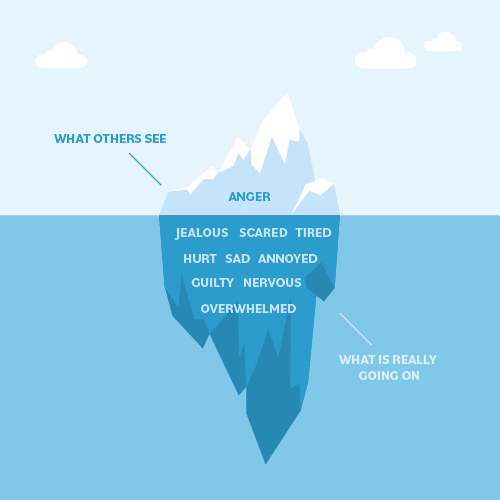
The Anger Iceberg
“Anger is what you see, but there’s usually a lot going on underneath,” Susan said.
This idea is often described using the ‘anger iceberg’. Like an iceberg, only a small part of the emotion is visible. Below the surface could be sadness, fear, guilt, or even hunger.
“It’s rare that we’re just angry,” Susan explained. “Anger is actually a secondary emotion. There’s usually something else going on underneath.”
What Anger Might Look Like
When children are angry, it often shows in loud, physical ways like yelling, slamming doors, or throwing things.
“But underneath that behaviour,” Susan said, “they might be feeling vulnerable, ashamed, scared, or overwhelmed.”
Even hunger can trigger an outburst. “Sometimes we don’t even realise we’re hungry until we eat and it’s the same with kids and emotions.”
How to Respond as a Parent
So what should you do when your child is angry?
“Be curious and be kind,” Susan advised. “When kids are angry, they’re not trying to give you a hard time they’re having a hard time.”
Instead of reacting to the anger, try asking questions. “Say, ‘It looks like you’re not just angry what else is going on?’”
Keep in mind that when kids shout, “You don’t get it!” that’s a clue. “They’re telling you they feel misunderstood, not just mad,” Susan said.
Model It Yourself
Parents feel anger too, and that’s okay. But it can be helpful to explain your own emotions.
“Sometimes we get angry because we’re scared,” Susan said. “Like if your child comes home late you shout because you were afraid something had happened.”
Time pressure is another common trigger. “In the morning rush, we yell, ‘Where’s your shoe?!’ But really, we’re stressed about being late.”
Showing your kids this connection helps them understand their own emotions better.
When You Don’t Know What’s Going On
Sometimes, kids don’t even know why they’re angry. That’s normal.
“You discover it together through conversation,” Susan said. “Just like you don’t always know you’re hungry until you eat.”
Ask questions. Stay open. “It’s about being kind and curious, not jumping to conclusions.”
When It Might Be More Serious
If your child’s anger becomes a repeated pattern, and no one seems to know why, it could be time to seek help.
“If the same behaviour keeps coming up and you’re stuck, it’s okay to talk to someone,” Susan said. “You’re not asking them to fix it you just need direction.”
The Power of Ongoing Conversation
The biggest takeaway? Keep the conversations going.
“Anger is often a sign that something deeper is happening,” Susan shared. “The more you talk with your kids, the more you’ll understand what’s really going on.”
“And don’t take it personally,” she added. “It’s not always about you it’s about what they’re feeling.”
Next time your child gets angry, take a breath. Then, take a deeper look. You might just find an emotion waiting to be heard.
As Susan reminded us: “Be kind. Be curious. And don’t stop the conversation.”
Listen to the full conversation below.