
Susan Woodworth from Walk and Talk Psychology joined Bec and Asa on Drive to talk about the conversation loop.
She began by discussing the emotions that teenagers face as they are navigating different relationships and the pressure of those things competing for their attention.

“In my practice,” she began, “I actually give this homework to like nearly all the parents of teenagers that I see.”
She explained that while toddlers have big emotions about the colour of their plate, teenagers are dealing with many internal emotions. She used the term Conversation Loop – how to navigate talking with your teenager to keep them talking.
The Conversation Loop
“If your teenager or came up to you and said, look, mum and dad, I’m having a really, really hard time and it would be really helpful if we could sit together and talk about this, that’s what you want them to hear.”
Unfortunately, it is seldom the case with teens.
Teenager Talk
“Teenager talk is a little different,” said Susan. “All behaviour is communication. The teenagers will say, ‘You don’t understand me. You don’t get it. You’re not even listening to me. It’s not the same as it was for you as it is for me.'”
Susan said that is their version of saying, ‘I am already irritated.’

3 Common Mistakes
One of the common mistakes parents can make is reacting to a behaviour before hearing the message underneath.
“If they’re giving you a hard time, they’re always having a hard time.”
The second is trying to have a serious conversation when parents are busy.
“Just before you are making dinner or getting ready to leave the house… Don’t have those conversations then. You are going to let your kid down when you have to leave.”
Finally, having these conversations while looking through your own lens of life experience.
“Instead, you need to focus on your child.”
Susan said it is more important to be with your child and pay attention to their problems, rather than trying to fix it through your own lived experience.
“Saying things like, ‘just don’t hang out with them… they’re not nice people,’ is an example where you are not actually listening to them.”
How to Have Conversations
- Pay Attention
“Number one, pay attention to when they’re asking you to listen to them, right? Those words they said before, means, I need you to listen to me.
2. Set Aside Time
“You’ve got to set aside, I think, an hour of uninterrupted time to talk with them. It might not take that long, but it may do. So set aside an hour. And when you do it, have a relaxed atmosphere. So something non-confrontational, something like having bubble tea together or having hot chocolate or going for a walk together.”

3. Just Sit and Listen
Susan said if they don’t want to talk to you, just enjoy your time with them.
“Just sit and be quiet. No, don’t try and talk. Don’t say anything. Don’t offer advice. Don’t just say, ‘What’s going on? It looks like you’re having a hard time.’ Don’t offer any advice. Just listen.”
Susan recognised that it may be hard for parents to resist talking because so many want to offer wisdom and draw from their own experiences. She emphasised, in spite of that, listening is key.
“Just focus just on listening because there’s no point giving advice until you really understand what’s going on for them. So you don’t talk at all. When it’s your turn, when they’re finished, you try to repeat back what they’ve said in your own words.”
It helps them to see that you understand and hear them.
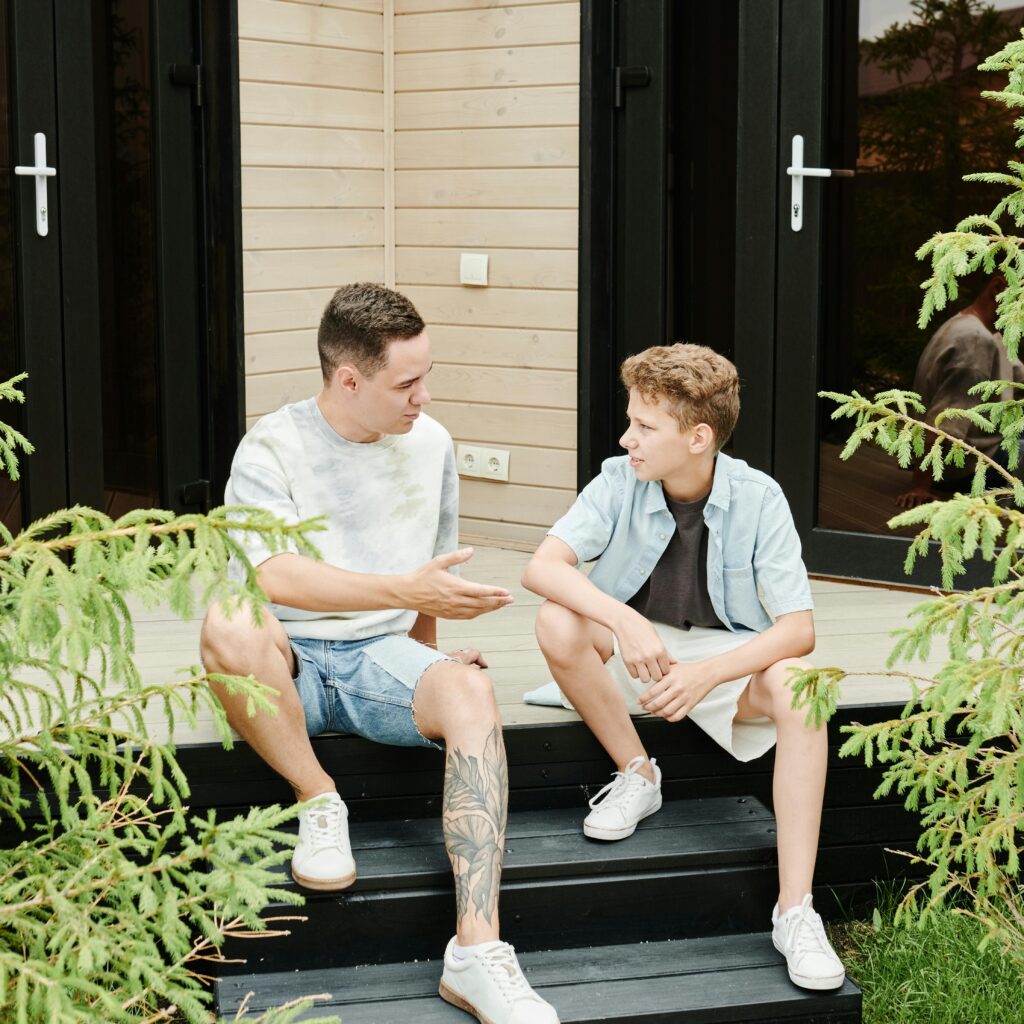
“Then you say, ‘Okay, what am I still not getting?’ If they say, ‘Close enough,’ it means ‘No’.”
“Ask them if they need any help, but usually once they’ve got the space to process this and talk about it. They’ve usually got it.”
Check out the full chat with Susan Woodworth below.