

Natalie Nicholls from PLECS Learning joined Doug on Mornings to talk report cards and looking beyond the grade.
Many parents can feel stress around meeting with teachers and getting to the foundation of what their child is achieving at school.
Natalie spoke from experience with her three children. There will be a waiting period, then the teacher will raise something that the child is finding tricky.
The Initial Report
“You’re thinking, okay, did I miss something? Is this my fault? Should I have done more? And then it comes down to, or are they going to be giving you anything extra? Or what power of influence do I really have here on what I’m going to do? Because it’s really scary.”
She said it can be challenging for a parent to hear that a child may be falling behind at the end of the first term. Parents may feel like they don’t have much control over a situation.
“When you come to that fork in the road, it determines the path for you and also for your kid, because you can walk out of that meeting feeling helpless.”

Extra Readers and Maths Practice
“We might do some extra readers or some extra maths practice or something like that,” said Natalie.
She said that it is more important for the parents to believe that they have influence over this situation.
“Then we walk out differently. We walk out with motivation. We walk out with that curiosity, feeling empowered, knowing I’m going to be able to make that change right now.”
Natalie described the difference to feeling powerless and helpless, because it is common for parents to start there.
“Do you want to stay there, or do you want to think about how we can make this better?”
There is a switch where parents are more likely to get a better outcome for their children, which in turn makes them feel more empowered and hopeful.

A Wealth of Resources
Teachers have a wealth of knowledge on how to help children. They also have roughly 30 children within their care and only 10 minutes to explain to parents everything the child is comprehending. Natalie said that a proactive attitude can bridge the communication gap between teachers and parents.
“If we, as a parent, can go back to that teacher after that 10 minutes, email them, and ask for more resources.”
She said that this is helpful to both parties as the teachers have many children that they split their focus with.
“You have a very different relationship and goal and motivator for your kid than what the teacher does. So just reminding us that it’s not a helpless situation, but we can ask the teachers, but also others for extra support and help.”
The Blame Game
Natalie warned parents of the blame game.
“We have to be really careful if you’ve got your husbands there or wives either way. We’re not going straight into the blame. Those people who know me know out there that this can happen really easily. When we’re having a look at what’s happening in the brain, so going back to that internal belief and the reason we get angry is because, you know, we’ve heard something we didn’t expect.”
“This isn’t just mindset fluff—this is neuroscience. Our brains are wired around something called a ‘locus of control.'” said Natalie.
Locus of Control
A locus of control is a psychological concept describing whether individuals believe they control their life outcomes or if external forces do.
“When you shift to the mindset: I can have an influence, it’s called an internal locus of control. I can have an influence. Your brain will shift to problem solving, curiosity, and then action taking.”
Natalie said the obverse effect is getting stuck, thinking you don’t have control.

“This is what we call the external locus of control. The brain then will lead to stress. It will then shut down, then avoid because that’s what it’s biologically wired to do. And it will only respond to the way that you are telling it to respond. So if you’re going to tell it one thing, it will respond one way. And if you tell it another thing, it’ll respond in the other.”
The important thing to remember is that we have the power and the ability to change our internal belief system. Grasping this as a parent will help you demonstrate this to your children.
“Learning about what’s actually happening, helps us to see this is not a quick fix, but it’s a journey.”
Square Pegs, Round Holes
In addition to this, it is about understanding that, sometimes we don’t always fit the standard of what the system is designed to be.
“What we really fail to look at is all these other skills that these beautiful kids have got. And unfortunately, the school system won’t show that. So even when I was having my interview for my child the other day, nothing was mentioned about her social capabilities. It was all just about academics.”
Natalie reminded parents that academics will not reflect a holistic view of a child. There is more to a child than what can be addressed in a meeting.
The Iceberg Effect
Doug added his own personal experience of struggling with dyslexia and asked Nat if she had any advice for families with issues of dysgraphia or mathematics. Doug said it can be an iceberg situation when there is more beneath the surface.

Pyramids of Learning
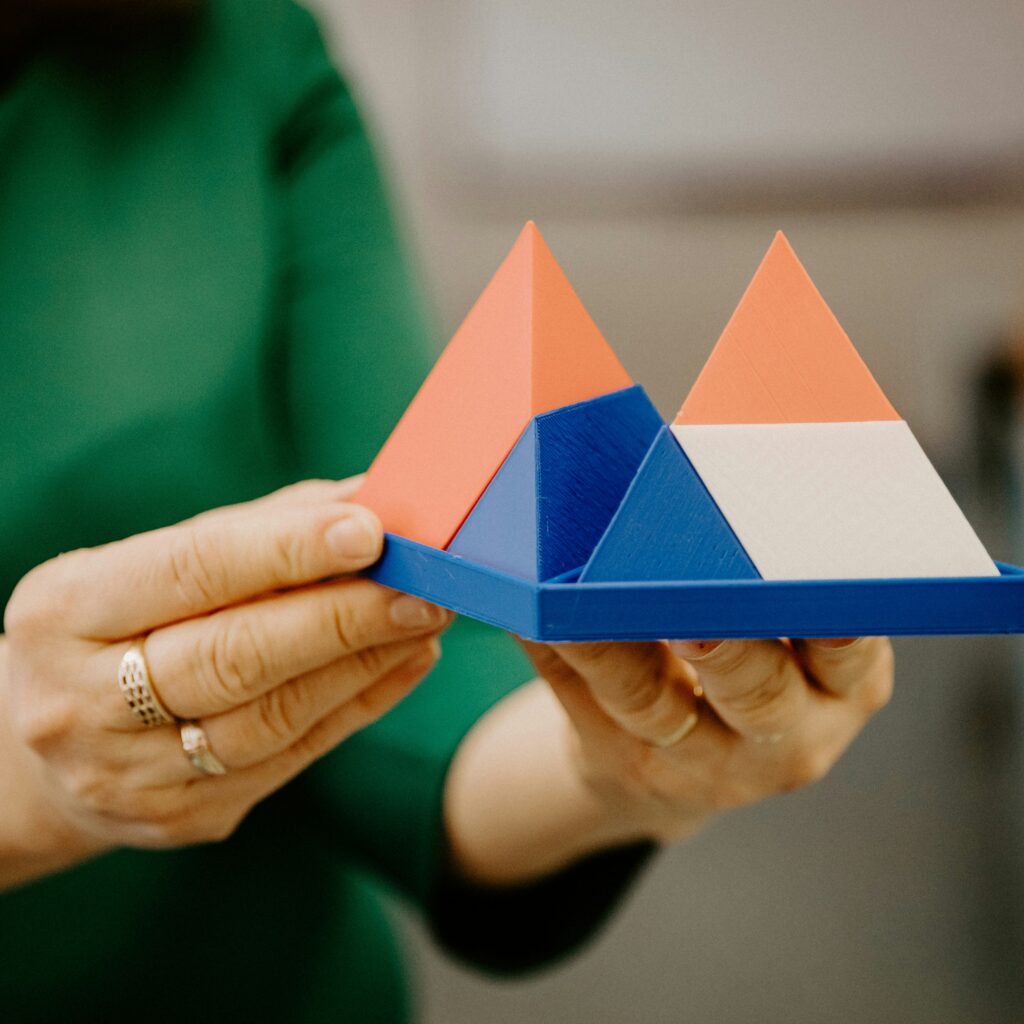
“There are a lot of pyramids of what we call the pyramids of learning,” said Natalie.
She explained it as learning as foundation.
“We need foundation skills first for everything. And one of the big ones is our emotional stability. For children, it’s about feeling seen by their family, safe by their family, and soothed. So a really, really good stable environment there to be able to ensure that we’ve got a really good regulated nervous system so that when we do face these challenges as well, that we don’t get very stressed out, we’re able to move through, be able to figure out next steps.”
She said that beyond emotional stability, there are mechanics involved in reading.
“There’s ocular motor things going on with our eyes. There’s lots of different areas of our brain that actually have to connect together to be able to do that. And a lot of the times with conditions such as dyslexia, the brain has been wired in a different way.”
She outlined the potential dangers of assuming our children are secure in this part of the pyramid before we looking into their mathematics and reading skills.
“We have this expectation of our kid just needs to be able to read or our kid just needs to be able to do maths. We have no idea what’s underneath that foundationally, biologically, and developmentally actually need to be in place first.”
“Unfortunately,” she continued, “A lot of educators are not educated on this. It’s nobody’s fault, but we’re really in a generation of learning. These need to be in place first for us to get to that tip.”

Strengthen Your Foundations
Natalie laid out her key takeaways.
1. Reframe Your Feedback
Go from initial judgment to attaining more information.
“When you’ve heard, you know, they’re not where they should be, how about this is useful data showing where support is needed.”
2. Meet Their Foundational Needs
“Go back to things like sleep, nutrition, exercise and movement. And our emotional stability there and how we’re feeling safe, calm, connected with our family.”
3. Be Empowered
Take that flexible action and feeling empowered. Parenting’s hard. We have that choice to decide, are we going to go with this, be empowered, have that energy to do it for ourselves and for our kids, or are we going to take a step back and feel conquered?”
Natalie concluded with an encouragement for parents to push past initial feelings and do our best to be there for our kids.
Check out the full chat below.