

Author and speaker, Amanda Viviers, joined Doug on Mornings to talk about the value of storytelling and its impact on our identity.
Amanda began by drawing from a verse in Romans, speaking of ordinary offerings.
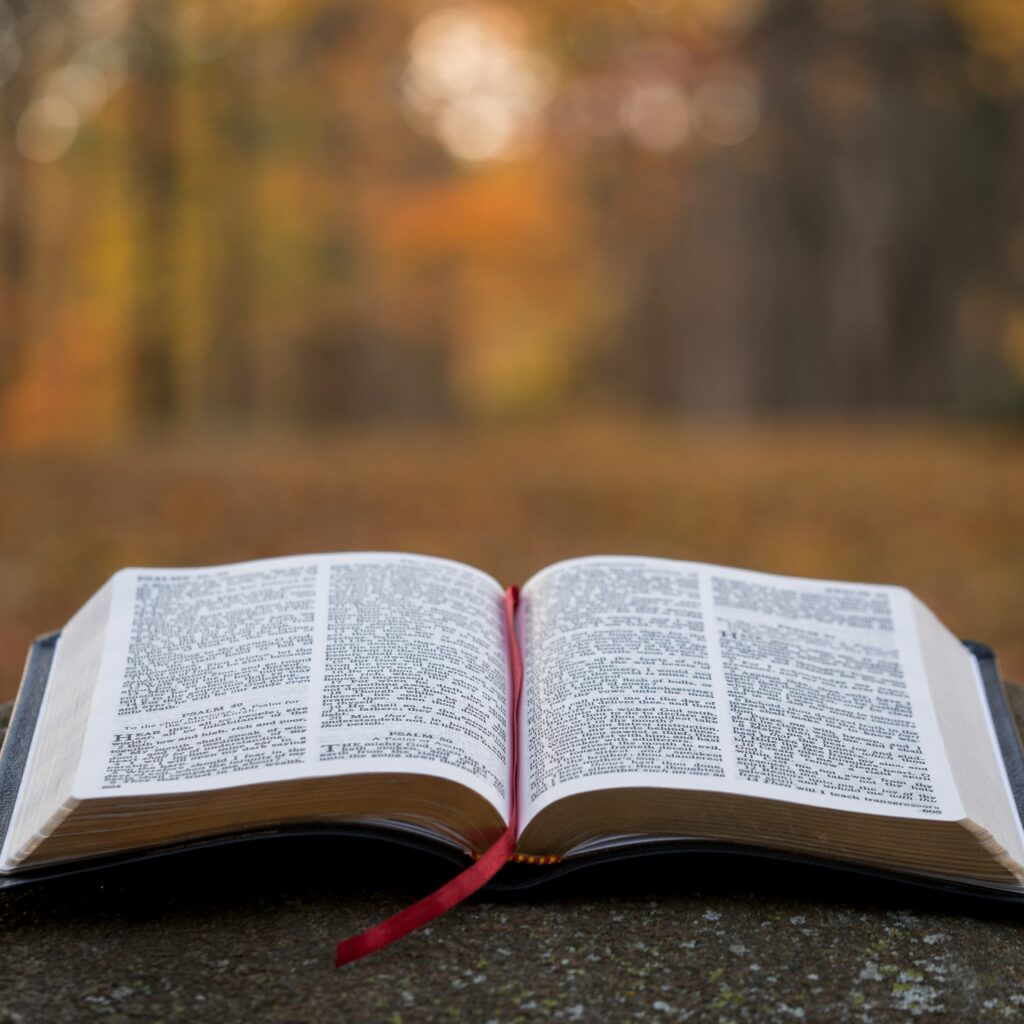
Take your everyday, ordinary life—your sleeping, eating, going-to-work, and walking-around life—and place it before God as an offering.
Romans 12:1-2
Sensationalised Stories
The belief can often be that a story needs to be sensationalised in order for it to be impactful, but there is in fact value in the everyday being an offering and a story worth telling.
“It’s that sacrificial element where we take the learnings of the day. Maybe you are in your kitchen, or you’re driving… you take perspective from that and ask: What am I learning from this?”
There are also other people to learn alongside.
“It’s the alongside part,” said Amanda, “I think we think of storytelling in terms of microphones or books or platforms or social media.”
She argued however, that it is more in the unseen.
Storytelling Alongside Our Children
“I love the power of storytelling for parenting,” she said.
Parents not only sit alongside our kids and their stories, but a great gift we have to offer is sharing our own experience.
“The idea of compassionate listening is that you can sit with the suffering with them and go, hey, I learned this as a teenager, or in my workplace, in my sporting team. It’s incredible to sit in a place where storytelling is empowered really well in your families and your workplaces.”
Letters From Oma
Amanda shared a story of travelling to Stellenbosch in South Africa where she got to meet her husband’s grandmother. It inspired her to record this woman’s story because after the sudden loss of her father, she longed for his stories growing up in Morowa, WA.
“It’s not just the stories. I miss the wisdom and lessons that have come from the stories that he told.”
Amanda then set up monthly phone calls to sit and record stories from “Oma,” her husband’s grandmother.
“I’ve got half a book written at the moment, which I’ve called Letters from Oma. I asked her about different topics, like, What does church mean? What did it mean to grow up in South Africa 90 years ago? Where has there been hope? Where has there been loss? What have you learned as a parent? And I’m only halfway through that project right now, but I think audio history is incredibly important and it takes time.”
“Historians would say that we have more storytelling and more captured than any history ever before. Because we’re all posting on social media every day. This means when we go back, even 10 years and you see some of the stories you were telling, historically, there will be more captured about this generation than ever before.”

She said that the main distinction is these stories are layered with filters an a polarisation of conversation because people are telling stories that lend to a particular audience.
Authenticity
“There’s an authenticity that comes back to memoir writing with an individual testimony that is honest and true.”
Amanda said this is a perspective that no one else will have.
“They often say that there are always 3 perspectives to everything. You, me and God. And I think that’s what we need to do.”
Your Story Matters
Every person’s story matters, and Amanda listed all the reasons why.
“It matters to your family and your neighbours, because you’re in lived experience. It matters to communities. And I think that God’s economy is village and the world’s economy is capitalism.”
She explained the power of oral culture through villages.
“We pass down wisdom, learnings and possibility for societal change through the stories that we tell. If there is a perspective and a lens that you have, it’s a really important one.”
Narrative Leadership Development
Amanda spoke of qualitative research being a scientific result of everyone’s difference perspective.
“We have quantitative, which is the numbers and the data, but we also have qualitative and qualitative research means that every story and every perspective brings a new sense of the common story and the narrative that’s being developed.”
Amanda has now been published in a university textbook by Rutledge, called Narrative Leadership Development.
“It’s a really well-regarded term now that the narratives that we tell about society and the narratives that we tell about our villages and our communities really do shape the future. So if you believe that the future needs to change, then what is your part in that?”
Storytelling Shapes Identity
Amanda said that storytelling has the power to shape our identity.
“When you know who you are, especially shaped by the people that have been around you and you learn more about yourself, it actually changes how you walk through the world.”
“Identity shapes confidence and courage.”
She said there are so many young people who don’t understand their identity or who they are.
“When they come up against conflict and challenge in workplaces, in school, it’s identity that shapes your confidence and your courage.”
She argued that understanding your story plays a big role in that. Knowing who has come before you, your country of origin and family values.
“Your origin creates a foundation for you to feel really confident in who you are for what you stand up for. The more you develop your storytelling skills, your purpose in God is defined.”
She said there is beauty there, that you bring into the future.

“I think any time spent reflecting, storytelling, sitting around a fire, laughing, building, it shapes community and it’s incredibly important.”
The Inner Critic
“One thing that I teach when I’m helping people to write their memoir or communicating and speaking at church is to really write the first draft in a way that you’re not editing or using the inner critic to be able to come into that critical part of the brain.”
Amanda explained that from a young age, we are trained to edit ourselves, think critically and make changes.
“Maybe it was our family of origin,” she said, “In the environment, children are to be seen and not heard, like finding environments where you’ll find that your inner critic is shaped by often your harshest critics.”

Something Amanda loves to teach is reframing the inner critic.
“The way that we hear or give ourselves feedback through a lens of kindness. Kindness actually sounds super weak but it’s actually one of the most formative things that you could do. It’s as simple as you could sit and write from a journaling prompt.”
“Don’t write from blank pages. You think that the ideas will just come to you. Actually, if they’ve come to you in a shower or when you’re driving, then that is fantastic, go on the thread of that… but so often when we sit in front of blank pages, we just get really stuck. The reason why we get stuck is because of the inner critic and this harshness that’s calm or it’s not good enough. Why does my story even matter? And when we start to reframe that, it’s an incredibly powerful tool.”

The Voice of God
The thing that I love to reflect on is actually the voice of God, like that sense that he is kind towards us. His mercy is new every day,” said Amanda.
We might think of God’s voice like a judge but there is compassion and kindness from a God who loves us, sees us and knows us.
“So being able to really shape that inner critic that we have as humans by the lens of how God sees us, writing is a powerful way to be able to do that. Storytelling is a powerful way to be able to do that and it’s something I’m really passionate about.”
Transformation Through Application
“We’ve got so much information, but we’re not unloading it in a way that brings it down to personalised application of the way that we move forward. It’s the same with the Bible. You can read the Bible over and over and over again, knowing, it is transformative by the renewing of our mind. But it’s when it’s shared, applied and brought to life in a fresh and new way, that’s where there’s a transformation between us.”

Rhema
Amanda concluded with the etymology of the word Rhema.
“Rhema means, the word of God, but he’s coming alive. It’s making meaning from it. It’s personalisation. That’s what changes lives.”
Check out the full chat with Amanda Viviers below.