

Nutritionist and Dietician, Haleigh Gray, revisited a couple of the key takeaways on diet confusion and important ways to navigate good nutrition.
Many people manage their food portions according to the weight they’d like to maintain. Haleigh said this is a common misconception of a balanced diet.

Weight Loss Fixation
“We give weight far too much focus as a single marker of health. Food provides nutrients our body needs to function day to day, supporting everything from energy and recovery to how our body manages the stress and demands we’re exposed to every day.”
She added to this by saying, our bodies are exposed to physical, emotional and environmental stress every day. This is constantly working behind the scenes to keep things in balance.
The same practices are true of exercise. We see the positive impacts on our health, but it also adds stress to our body.

“Part of what food does, is helps us respond to and recover from that through vitamins, minerals, and antioxidants in the food we eat. The key point is that health and nutrition included isn’t about extremes. It sits somewhere in the middle. Too much or too little, whether that’s food or exercise or restriction or focusing on weight can have consequences.”
She emphasised that nutrition does not come down to reducing or removing things so that we can look a certain way.
“It’s about supporting your body over time. Yeah, so that it can keep doing what it needs to do everyday.”
Holistic Health
Haleigh highlighted the difference between hyper-focusing on what area of health, spanning over a couple of days, versus overall health on a holistic scale.
“It is good to look at the holistic picture and not hyper-focusing on one meal and perfection in that, but it’s about consistency over time. Are you eating regularly, not skipping or overly restricting meals and getting a variety of foods throughout your week? Are you feeling energized and satisfied?

She said there are dangers around feeling hungry to the point of anger, what is referred to as being hangry.
“Shifting away from those hyper-focused habits can take a lot of pressure off and then lead to healthier habits.”
Food and Body Shame
Many people are ruled by the shame they carry around food.
“I see many people struggle with in terms of mindset and I’ve experienced myself is that food and body shame and it rules our life. A lot of that comes from, again, that all or nothing mentality and assigning a moral value to food choices.”
Haleigh said the “good” and “bad” food choices cause people to feel conflicted and assign blame to the type of food they choose.
“That actually puts us more into a rut and we just get stuck in those places.”
Variety of Food
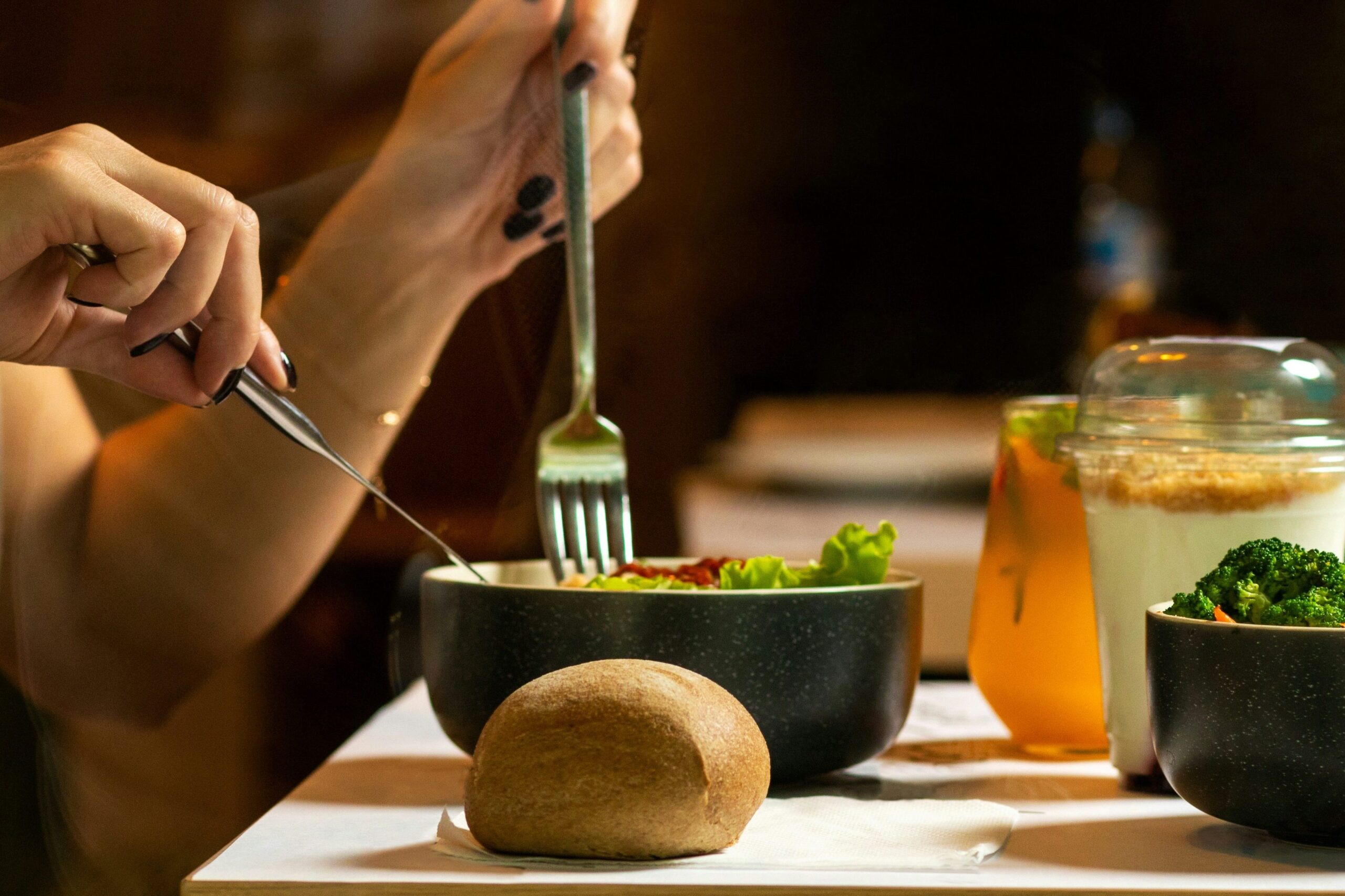
Haleigh emphasised her firm belief in a well-rounded variety of food to complete a balanced diet.
“That means including foods from the five main food groups, fruits, vegetables, grains, lean protein, protein alternatives, dairy, dairy alternatives. Building the bulk of your meals around plant foods most often is really a simple way to support this.”
She said it also helps us not get caught up in whether something is natural or processed.
“There are plenty of processed foods that are not only nutritious, but very convenient. That helps healthy eating be more achievable. There’s absolutely no shame in including them. It can be helpful whether the food is natural or processed to look at are they high in saturated fat, added sugar or salt?”

She said if we really enjoy those foods, we can find balance throughout the week, often because if they are highly palatable, they are easy to overeat.
“It’s actually when we overeat food and have excess that leads to additional weight gain and chronic disease risk, more than the actual food itself.
Portion Control
These foods have a certain amount of fat and sugar that contribute to the overall taste. The lack of portion control leads to excess weight gain. We are then discouraged from eating that food altogether, when in fact, Haleigh argued, we actually need salt and sugar in our body.
“I think it’s similar to weight, we can kind of hyperfocus on, yeah, is this food really good or bad for me? Instead of just having a small portion of cake at a birthday party and moving on with life.”
She said that often can lead to obsessive exercise for some, to the point where we feel like we have to earn food.
“Again, we’re not focusing on what the purpose of food is. Not only is it social connection and a connection to our culture, but it nourishes our body. It gives our body the nutrients it needs to keep doing what it does every day.”

Obsessessive mentality can lead to an exhausting circle that becomes emotionally damaging to ourselves and our relationships.
“If you’re constantly trying to figure out when you’re going to exercise, it can rule your life very easily. So, step out of that pattern into something that’s more flexible, more realistic and sustainable for your everyday.”
Insulin Resistance
“Insulin resistance is something a lot of Australian adults and adults around the globe are facing. So whether that’s pre-diabetes or a diabetes diagnosis, if that’s you, I definitely would ask your GP for a dietitian consult as part of our allied health care plan to get ahead of that,” said Haleigh.
She said the good news is, with early diagnosis we can have our body respond to insulin through lifestyle changes including, exercise, stress management and diet.

“There are modifications that your GP should be encouraging with help and support from a dietitian first before we jump to something more medicated. Food allergies, diabetes, sports nutrition and aging well.”
Check out the full chat with Nutritionist and Dietician Haleigh Gray below.